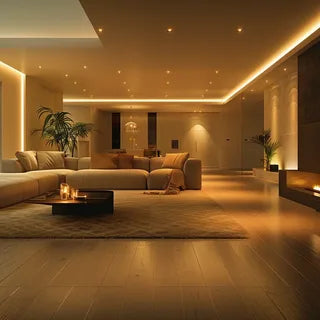
You know that moment when you switch on the ceiling light at night, but your room suddenly feels more like a dentist’s waiting room than a place to relax? Yep. That’s where ambient lighting comes in. It’s that soft, spread-out glow that makes a room feel comfortable, welcoming, and a little more like home.
Sometimes, all it takes is a lamp beside the sofa or a gentle glow in a dark corner to change the whole feel of a room. Your furniture, favourite cushions, and cosy blankets stay the same, but the right lighting brings it all together. Without making you spend an entire weekend redecorating.
So, how can you bring that feeling into your own home? Let’s look at which rooms benefit from ambient lighting, how to combine different light sources, and what to consider before choosing new fixtures. You might find that creating a cosier space is easier than you think.
What Is Ambient Lighting and Why Does It Matter?
Ambient lighting is the general, overall light that fills a room so you can see and move around the space comfortably. Think ceiling fixtures, floor lamps, or wall lights the stuff that sets the base layer before anything else gets switched on.
Task lighting focuses on specific activities, such as reading or working, while accent lighting highlights a favourite print or plant. Natural Resources Canada says good lighting can make a space comfortable, functional and enjoyable, which is why combining all 3 can make a room more comfortable, functional and visually appealing.
Which Rooms Can Benefit From Cozy Ambient Lighting?
Nearly all rooms can be improved, but each room has a specific role. A bedroom wants to wind down, an entryway wants to say hello, and your desk corner wants to keep you awake. A real-life example of that would be:
- Living Room: Set a lamp or two by the sofa and reading chair to make the room cosy for chatting, reading, or just doing nothing. Don't set the light too bright so that the TV is the brightest object in the room.
- Bedroom: Dim the lights and keep them softer in the evening, such as the dimmable Mini Lantern Portable Lamp on a nightstand. By replacing a bright ceiling light with a soft light, the room can become more serene even before you lift the drapes.
- Dining Area: If you have only one lamp over the table, place a lamp on a sideboard or shelf nearby to create a dining area. Even Tuesday takeaway starts to feel like an occasion.
- Entryway: A small lamp on a console table says "Welcome Home" before you even get to take off your shoes. It also means you will not be going into an empty hall at the end of a long day.
- Home Office: Use a lamp with a soft glow to help avoid a distracting bright display when you're working. This little change contributes to a more cohesive and harmonious workspace.
- Bathroom: Use ambience lighting as an accent over the primary bathroom lights. Test the decorative fixture or lamp before placement in a bathroom for suitability and in accordance with the manufacturer's safety guidelines. Ensure that electrical equipment is kept away from water, unless it is designed and installed for use in such a location.
5 Ways Ambient Lighting Can Make a Home Feel Cozier
Think about the last time a room felt properly cozy. Was it the furniture, or the glow in the far corner? Light shapes that feeling more than most of us realise. Here are 5 ways it can quietly change a space:
- Creates a Softer Atmosphere: Diffused light softens the contrast between bright and dark areas, helping the room feel more balanced. Instead of one harsh source dominating the space, the light feels gentler and easier on the eyes.
- Adds Warmth During the Evening: Warm-toned light gives a room a relaxed feel as daylight fades. It's the difference between a space that shuts down for the night and one that exhales.
- Makes Rooms Feel More Inviting: Evenly spread light makes shared spaces feel open to everyone. Guests relax the second they walk in, because nobody gets stuck in a shadowy corner.
- Highlights the Room's Décor: Well-placed light picks out your furniture, artwork, and small decorative finds. Suddenly that thrifted vase gets the attention it deserves.
- Creates Different Moods: Dimmable or layered lighting lets one room switch between movie night, dinner, and quiet reading time. Same room, three completely different evenings. Not bad.
How to Layer Ambient Lighting With Other Light Sources
Layering means using more than one kind of light in a room so each one handles a different job. Imagine your living room tonight: a soft glow overall, a reading lamp by the armchair and a spotlight on a favourite framed print.
One bright overhead fixture can make a room feel flat because it doesn't give you much control over individual areas. Layering ambient, task and accent lighting lets you adjust the brightness and focus depending on what you're doing. Here's how each layer works:
- Ambient Lighting: The base layer that gives the whole room a gentle, even glow. It's what you move around in, so it should never feel harsh or blinding.
- Task Lighting: Focused light right where you read, cook or work. It stops you squinting at a recipe while the rest of the room stays soft.
- Accent Lighting: The finishing touch that draws the eye to artwork, a shelf of treasures, or an architectural detail. A little goes a long way here.
The Mix: Keep the ambient layer low and steady, then switch task and accent lights on only when you need them. That way the room changes with your evening, not the other way around.
5 Simple Ambient Lighting Ideas to Try at Home
You don't need an electrician or a full renovation to get this right. Most of the magic comes from small swaps you can do on a Saturday afternoon, often with pieces you already own. Start with these 5 ideas, in any order:
- Add a Table Lamp to a Side Table: Create a small pool of light beside the sofa, armchair, or bed, close enough to reach without leaving your seat. The dimmable Standard Open Top White Glass Mushroom Table Lamp suits this spot, since you can lower the glow as the night goes on.
- Use Floor Lamps in Empty Corners: A lamp in a dark corner brightens dead space and adds height and visual interest. No outlet nearby? A rechargeable lamp can sit there without a cord trailing across the floor.
- Create a Warm Dining Setup: Place a lamp on a sideboard and pair it with candles and your table décor. The meal ends up lit by a glow rather than a fixture, which makes slow dinners feel easier.
- Use Multiple Smaller Light Sources: Place 2 or 3 smaller lamps at different heights, such as one on a side table and another on a shelf. This gives you more flexibility to light the areas you're using without switching on every fixture.
- Combine Lighting With Decorative Elements: Set a lamp beside a plant, artwork or a chunky throw so they read as one styled corner. The Petite Close Top Jade looks right at home next to greenery.
How Can Ambient Lighting Complement Your Home Décor?
Think of your lamps as part of the outfit. A chunky glass base looks at home next to rounded furniture, while thin metal frames suit sleeker lines. Matching a lamp's colour or finish to nearby wood, ceramic or fabric helps tie the whole look together.
Light decides which objects get noticed, so aim a glow towards a framed print or vase and let the rest fade. Place lamps in pairs or a loose triangle for balance and choose pieces that look like décor even when switched off.
How to Choose the Right Ambient Lighting for Your Home
Shopping for lamps can get confusing fast, with lumens, Kelvin, and plug types all competing for your attention. Don't worry. It comes down to a handful of simple checks you can run in your own room before you buy a single thing:
- Room Size and Available Space: A small bedroom may only need one lamp, while a big living room usually wants several. Make sure each piece fits without blocking walkways or crowding the furniture.
- Room Function: Lounge areas suit soft, low light, while kitchens and workspaces need more brightness. Match the glow to what you actually do in that room.
- Light Placement and Room Layout: Notice where shadows fall at night, then position lights around the sofa, bed and doorways. Nothing should sit in a walking path.
- Fixture Style: Pick shapes, colours and finishes that echo what's already in the room, so the lamp looks chosen rather than just added.
- Brightness and Existing Lights: When comparing light output of different bulbs, consider lumens, but remember that watts measure energy consumption. Consider the amount of light your existing fixtures and new lamps give the space, along with the size, layout, and purpose of the room, to make it feel comfortable, not too dim or too harsh.
- Colour Temperature: For a comfortable feel, try warm-white bulbs around 2700K to 3000K in living rooms and bedrooms. A cooler light, around 4000K, can be useful for work that needs to be seen more clearly, though the best color temperature depends on what you are doing and where you are doing it. Natural Resources Canada provides further guidance on choosing suitable lighting.
- Power Access: Check that an outlet sits near your chosen spot. If it doesn't, a battery-powered lamp lets you skip the cord altogether.
- Safety: Keep cords out of walkways, avoid overloading outlets, and look for a certification mark on electrical products, as Ontario's Electrical Safety Authority advises. For any hardwired fixture, hire a licensed electrician instead of doing it yourself.
Explore Humber's Lighting Collection for a Warmer Home
By now you've probably spotted a dark corner or two in your own place. Fixing them doesn't mean rewiring anything. It means picking lamps you genuinely love looking at, because they'll be catching your eye every single day and lighting your evenings.
Humber's lighting collection is full of glass mushroom lamps, many of them handmade, in playful colours, including plug-in table lamps and cordless ones you can carry. They're made for soft glow rather than full-room brightness, so pair them with your main light.
Tonight, switch off the harsh overhead light, turn on a soft glow beside your favourite chair and settle in with a cosy blanket. Sometimes, a small change in lighting is all it takes to make an ordinary evening feel more inviting. Explore Humber's lighting collection to find a lamp that suits your space and the atmosphere you want to create.
Frequently Asked Questions (FAQs)
Q1. What colour temperature is best for cozy ambient lighting?
The typical colour temperature for cozy rooms at home is between 2700K and 3000K and is known as warm white. According to Natural Resources Canada, 3000K or lower is the warm range, ideal for ambient lighting in living rooms and bedrooms, and 4000K and up is good for task lighting.
Q2. Can ambient lighting work in a small room?
Yes. and often the small rooms will require less than you think! It is typically done with one or two low lighting sources, and the lights on side tables or shelves help save space. A dimmer light can also make a small room appear more tranquil.
Q3. Can you use ambient lighting without an overhead light?
Absolutely… Many homes use lamps, and if one lamp isn't enough, they have more spread around the room so there is no spot in shadow. Rechargeable lamps or battery-powered lamps are useful in areas where there is no electrical power, but may require a stronger light for reading or cooking.
Q4. Are dimmable lights useful for creating a cozy atmosphere?
Yes. It's one of the quickest ways to alter a room's ambience in a few seconds. Dim the light for movie night and then go back to the regular level when it's time to clean up or read. Check to see if the lamp or bulb is adjustable.
