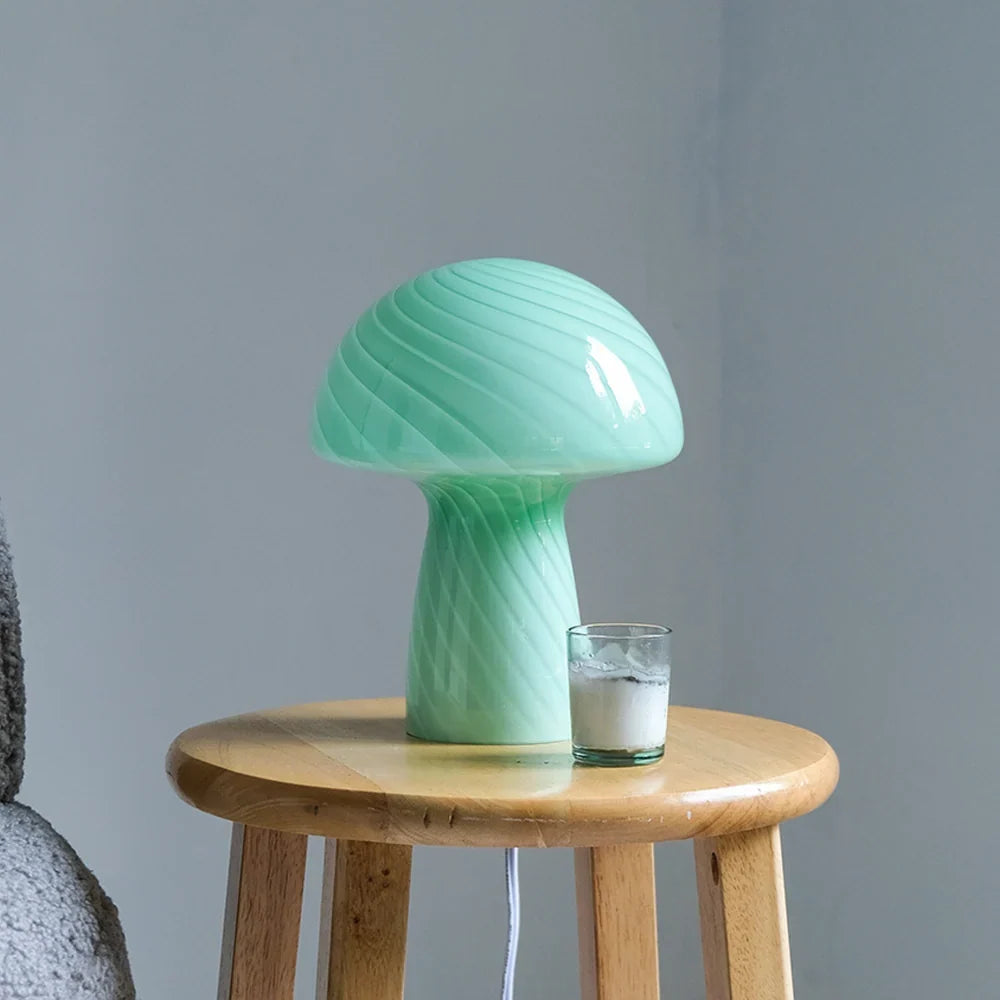
The same living room can be a homework spot at 5 and a reading corner at 9!
Each of these moments needs a ceiling light that can brighten the whole room, but it may not provide enough light at the homework table or reading chair.
That’s where a plug-in lamp comes in. You can place it near the table or chair, bringing light closer to whatever someone is doing. It also plugs into a regular wall outlet, so there’s no need for an electrician or new wiring.
If you’re considering one for your home, in this blog we’ll look at where to place it, how to choose the right size and what running it could add to your Ontario hydro bill.
What Are Plug-In Lamps and How Do They Work?
Plug-in lamps get their power through a cord that connects to a wall outlet, rather than being wired directly into your home’s electrical system. You can set one on a table or shelf, plug it in and switch it on.
A socket holds the bulb, and a switch on the lamp or its cord turns the light on and off. Some of Shop Humber’s mushroom lamps have that switch built into the bulb socket.
Unlike plug-in lamps, hardwired lights connect directly to your home’s electrical wiring. That keeps a hardwired ceiling light or wall sconce in a fixed spot, so moving it usually means having electrical work done.
The two can still work together in the same room. A ceiling light can brighten the space for cleaning up or hunting for a lost mitten, while a plug-in lamp adds a softer glow beside the sofa or bed.
Where Can Families Use Plug-In Lamps Around the Home?
A lamp works in any room with a flat surface and a nearby outlet, and Shop Humber’s four sizes fit narrow or wide tables. Here are 7 spots around the home where a lamp makes the most sense.
- In the bedroom, a nightstand lamp gives you light for evening reading and a soft ambient glow for relaxing before bed.
- In the living room, a lamp on a side table adds light at sofa level.
- In a reading corner, a plug-in lamp beside the armchair turns it into the favorite spot for a good book or finishing homework.
- In a home office, a desk lamp works next to the room’s main lighting and gives you extra light for work.
- In the dining area, a decorative lamp on the sideboard adds soft ambient light to family dinners.
- In the entryway, a small lamp on a console table adds both light and décor where everyone fumbles their keys, so those items are never lost.
- In the bedside lighting that lets you put the switch within arm’s reach, so nobody climbs out of bed to turn off the last light of the day.
5 Reasons Families May Choose Plug-In Lamps for Everyday Lighting
From homework to bedtime stories, families need different kinds of light throughout the day. A single lamp covers all of those moments. Here are 5 reasons families choose one for everyday lighting.
- It’s easy to add to existing rooms, as a lamp brings in extra light without needing a major room redesign.
- It’s useful for different activities, so the same lamp makes a spot for reading at 7, unwinding at 9, and that late work email at 11.
- It gives you flexible placement because the lamp sits on any sturdy surface near an outlet where you want more light.
- It adds ambient lighting, the soft background light that pairs well with a bright ceiling fixture.
- It travels with you (whether between rooms or into a new rental) since a plug-in lamp needs no wiring to set up.
What Makes Plug-In Lamps Practical for Ontario Homes?
Plug-in lamps use the outlets already in your home, so you can add light without installing a new fixture or hiring an electrician.
That helps when a room’s existing lights don’t reach the places you actually use. One living room might have a ceiling light in the middle, while another relies on a wall switch that controls an outlet. Neither setup guarantees enough light in the corner beside the sofa. You could install another hardwired light there, but in Ontario, that can mean hiring a licensed electrical contractor and filing a notification with the Electrical Safety Authority. So a lamp on a side table is a simpler way to brighten that spot.
The lamp doesn’t have to stay in that corner, either. As your children grow, for example, a nursery might become a big-kid bedroom, or a play corner might turn into a homework area. You can move the lamp to the new bedside table or desk without changing the wiring.
Being able to place a lamp where it’s needed also helps when two people share a bedroom. One person might want to read in bed while the other is ready to sleep. A bedside lamp keeps the light closer to the reader without turning on the ceiling light for the whole room.
What Should Families Look for When Choosing a Plug-In Lamp?
Families should look for a lamp that fits its spot and suits the job they have in mind. Here are 7 details worth checking before you buy.
- Size comes first, because the base needs room to spare, and the Mini and Petite measure 6 inches wide while the Standard and Large measure 9.
- Brightness depends on the job, as ambient light, reading light and dark corners each need a different bulb.
- Dimmability gives you more range at night, and the Standard Open Top and White Stripe Large Close Top both include a dimmer. The Mini and Petite skip the dimmer, but they work with smart bulbs that dim through an app.
- Bulb compatibility matters just as much, and every lamp in the collection takes an E26 bulb (the regular medium screw base) with a 40-watt maximum.
- Design should suit your current décor, which is easy with 11 options that range from calm whites to bolder Bubblegum and Lilac.
- Cord placement deserves a quick look, since each cord runs 5 to 6 feet and shouldn’t cross a walkway. The nearest outlet should also be suitable, not crowded with other plugs.
- Intended use comes last, and Shop Humber’s product pages mark these lamps for indoor use only. The care guide also says to turn the power off before you clean the glass with a damp cloth.
Plug-In Lamps vs. Other Everyday Lighting Options
A plug-in table lamp is the middle option, because it skips the wiring a ceiling light needs but still runs from an outlet. The table below shows how it compares with three other everyday options.
| Lighting option | Best for | Power source | Main trade-off |
|---|---|---|---|
| Plug-in lamps | Extra light in one spot without a fixed fixture | Standard wall outlet | Placement depends on cord length |
| Ceiling lights | General light across the whole room | Home wiring and a wall switch | Stays in one spot, and new ones need an electrician |
| Floor lamps | Larger areas or spots where floor-level light works better | Standard wall outlet | Takes up floor area and needs a clear cord path |
| Portable/battery-powered lamps | Moving light around without relying on an outlet | Rechargeable or replaceable batteries | Needs regular charging or fresh batteries |
So no single option suits every room, because the right choice depends on the activity and where the light needs to go. Flexibility matters too, since a lamp moves in a minute while a ceiling fixture stays in place for years. And for spots with no outlet at all, Shop Humber also carries portable rechargeable lamps.
How Can Plug-In Lamps Add Cozy Lighting Without Major Changes?
Plug-in lamps can make a room feel cozier by adding pockets of softer light around the places you sit, rather than relying on the ceiling light alone. All you need is a lamp and a nearby outlet, not a renovation.
Once you’ve finished cleaning up after dinner, that bright ceiling light might feel like more than you need. Switch it off and turn on a lamp beside the sofa, and the seating area takes on a gentler glow.
If the corner by the window still looks dim, another lamp on a side table can brighten it. Together, they create two comfortable spots: one for conversation and another for settling down with a book. This works especially well when guests arrive. Two colourful, hand-blown glass lamps on the buffet can catch their attention and give them something to talk about.
The lamps also become part of the décor, even when they’re switched off. Shop Humber’s Butter or White Stripe lamps could complement warm wood and neutral fabrics, while Jade or Cucumber Green glass could add colour beside houseplants.
Their mushroom-shaped glass shells take inspiration from vintage Italian Murano lamps, with hand-blown patterns that can vary slightly from one lamp to another, even in the same colour.
How to Choose the Right Plug-In Lamp for Different Rooms
The right plug-in lamp for each room depends on the surface you have and what you plan to do there. Here are 5 common setups and the Shop Humber lamp that fits each one.
- For a bedroom, the 9-inch Petite Close Top fits a nightstand, and its closed glass shell keeps the light soft at bedtime.
- For a living room, the 12-inch Large Close Top suits a console or side table, and its White Stripe and Butter versions add a dimmer for movie nights.
- For a reading area, the dimmable Standard Open Top beside the chair puts light right on the page.
- For a home office, the 8-inch Mini fits a crowded desk and adds to the room’s main light without cluttering your work setup.
- For decorative use, the shape, glass finish, colour and overall design all matter, so a swirled Lilac Petite or a White Stripe Large becomes the focal point of a shelf.
Browse Shop Humber's Plug-In Lamps for Everyday Home Lighting
A plug-in lamp can add light beside the bed, at a homework desk or in a living room corner without changing the wiring. Whether you need something small for a bedside table or larger for a living room console, Shop Humber's hand-blown glass mushroom lamps range from the $99 Mini to the $275 Large Close Top.
If you're choosing lamps for more than one room, you'll also get an extra 10% off when you buy two or more mushroom lamps.
Better evenings start with the right lamp, and Shop Humber has yours ready to ship!
Frequently Asked Questions (FAQs)
Q1. Can you use plug-in lamps in a room without ceiling lights?
Yes, plug-in lamps can light a room without a ceiling fixture, although you may need more than one. Placing lamps on different sides of the room can help spread the light more evenly. For example, you could place a Shop Humber Large Close Top on the dresser and a Petite on the nightstand, then check whether their bulbs provide enough light for the room. If either lamp uses an outlet controlled by a wall switch, you may also be able to turn it on as you enter, provided its own switch is left on.
Q2. How do you hide plug-in lamp cords without damaging the walls?
You can guide the cord behind furniture, keeping it clear of anything that might pinch or damage it. Shop Humber’s plug-in lamps come with 5–6-foot cords, which may be long enough to reach a nearby outlet without an extension cord. Removable adhesive clips can hold the cord in place without drilling holes. If more of the cord is visible, a suitable paintable cover along the baseboard can keep it neat. Just don’t hide electrical cords under rugs. Ontario’s Office of the Fire Marshal warns that this can damage the cord and cause a fire.
Q3. Do plug-in lamps use a lot of electricity?
Not typically, especially if you're using a low-wattage LED bulb. For example, Shop Humber's Jade Green Glass Mushroom Table Lamp product page links to a Philips LED bulb that uses just 5.5 watts while providing light comparable to a traditional 40-watt incandescent bulb. Run that LED for three hours every evening, and it uses about 6 kilowatt-hours (kWh) a year. At Ontario's October 2026 off-peak Time-of-Use rate of 9.8 cents per kWh, that works out to roughly $0.59 in electricity usage charges if you run the lamp after 7 p.m. and the rate stays the same. Your actual bill will also reflect other charges.
Q4. Are glass plug-in lamps safe around kids and pets?
They can be used in homes with kids and pets, but careful placement matters. A sturdy dresser or shelf, well out of reach of little hands and swishing tails, can help keep a glass lamp from being knocked over. Keep the cord out of reach, too, since a toddler or curious pet could pull the lamp down. There’s also the bulb to consider. Shop Humber’s mushroom lamps have UL-certified sockets, but you should still use a compatible bulb within the stated wattage limit and let the glass cool before handling it.
